Community and connection

Share experiences, honour loved ones and find hope in the Niagara mental health community.

Memorial Forest

Founded in 2009, the Memorial Forest seeks to reduce the stigma around mental illness and promote greater understanding and compassion from the community as a whole.

The site is located at the Glenridge Quarry Naturalization Site at 1860 Sir Isaac Brock Way in St. Catharines. It features mature trees, an inscribed stone and plaques that honour family and friends who have passed on after battling mental illness.

2025 Vigil

Free event

Wednesday, Oct. 8
3-4 p.m.

A Memorial Forest vigil takes place annually during Mental Illness Awareness Week. No registration needed.

Watch the 2025 Memorial Forest Vigil

Getting to the Memorial Forest

  • By foot: From the Glenridge Quarry parking lot, walk five to 10 minutes along a stone path
  • By car: Enter through the gate at Sir Isaac Brock Way

Ways to get involved

Thank you to the generous donors, local businesses, sponsors and volunteers who have been involved in making Memorial Forest a reality.

Financial donations help with the maintenance of Memorial Forest. Name plates to memorialize a family member or friend can be purchased.

For information, call 905-688-2854 ext. 7353 or email Niagara Region Mental Health.

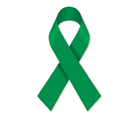
Green ribbon

What it represents

Green signifies new life, new growth and new beginnings.

Why we wear it

The green ribbon is a symbol for raising awareness about mental illnesses and showing support.

Wind phone

In 2024, the Memorial Forest in partnership with Hospice Niagara, welcomed the Wind Phone.

This idea began with Sasaki Itaru in Japan, who set up a disconnected phone in his yard to feel connected to his lost loved one while grieving. Today, there are over 100 wind phones worldwide.

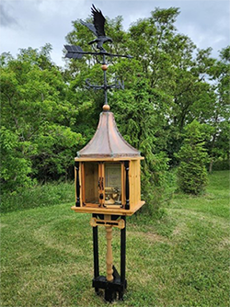
Thanks to the generous donation from Ray and Judy Fortier, a wind phone now stands in the Memorial Forest in a wooden box beside the pavilion.

"A Wind Phone is for anyone who has lost someone special in their life. It provides a way to express feelings, share memories and say the goodbyes you never had the opportunity to say. The concept is simple, yet incredibly profound. While the actual phone is not connected to anything, it offers an opportunity for people who are grieving to talk with their special person -- to say what they need to say, and release it to the wind." Hospice Niagara

Recovery stories

Featured stories

Mental illness is a topic that's not talked about often enough, and yet there can be great comfort, hope and encouragement in knowing that others share the same challenges. Learn about stories of hope and resilience from individuals in our community.

There is a life principal that says; "We keep what we have by giving it away". Telling my story helps me keep my recovery, by giving it away in a message of hope to others.

My name is Don and I am an Acadian Mi'kmaq. PTSD has been a part of my life since the age of three. I was 11 years old and our home had never been a safe place for me, so my mom sought help from the church. Unfortunately, she would regret that decision until her death. I don't even need to tell you why she regretted that decision, because you already know. Your head is already going there, because you've heard it so many times before. My father's physical violence was a walk in the park compared to what this monster had planned for me.

I ran away from home at the age of 14 and I have been on my own since. I was not just trying to escape the prison that I was living in - I was trying to escape the prison that was living in me. Living seemed just as terrifying as dying back then. There was no escape and before getting sober in 1990, my illness would take me to numerous jails, rehabilitation centres, mental institutions and even one straight jacket.

Being sober was certainly a great help, but my difficulties were far from over. I started attending church and became an active member of the community. Not long after I was betrayed again. Another betrayal, but this time I was down for the full count. I couldn't run my business anymore, I stopped writing music, I stopped singing. My song was now dead and I felt like I was truly dead inside.

Flashbacks haunted me everyday. This time I had made a promise to my wife that I would get help. So, I sought help through Niagara Regional Mental Health and they suggested "Hope Recovered" a group that helps you learn about PTSD and how to deal with symptoms and triggers.

Following that I spent more than a year with a therapist who specialized in PTSD recovery. Between my Hope Recovered group and my therapist we worked through what seemed like most of my life. We spent more than a year, every week for 90 minutes, working hard to process the trauma in a proper, and respectful way. With each session I became more of the man I was intended to be. I even went back to work, started writing music again and now I'm working on my first album.

Now I have a full stock of tools to help me in my continued recovery. Today, I well up with tears of joy, because I'm beginning to feel something that I have never felt in my whole life. Like an internal assurance, It's feel like a confidence in who I am.

Thank you Niagara Regional Mental Health and staff for my hope recovered.

I am a former registered nurse, previously working on an acute mental health unit. In 2012, I was critically injured by a mental health client. I am also a traumatic brain injury survivor, with a diagnosis of post traumatic stress disorder and anxiety disorder.

I received psychosocial care to assist in my recovery but had to endure the long waiting lists for care. During the waiting period, I managed to get into some bad situations, resulting in crisis after crisis, until I reached rock bottom where I alienated myself from my loved ones.

Lost and severely depressed, I finally reached out to a previous co-worker, who along with my family doctor, admitted me to St. Joseph's hospital. Here, I finally received counseling and access to workshops such as cognitive behaviour therapy and dialectical behaviour therapy. This therapy assisted in getting me on the right track to feeling better about myself.

Today, I work on my self care and mindfulness on a daily basis, attend workshops, and I am a member of the client advisory committee with Niagara Region Mental Health.

Self care does not come easily to me. My psychiatrist and family physician hold me accountable to making me a priority. Volunteering in the community and socializing are important activities that make me feel good about myself.

Not everyone needs high doses of meds, so my ongoing recovery requires self-advocacy.

When I came to Canada, the stress of all the government requirements and finding a home landed me in the hospital and required me to take six times the dose of medicine that I had in my prior country. The side effects were unbearable. I gained 60 pounds and felt numb. My life amounted to going through the motions, but I also felt trapped.

I was placed on a community treatment order and given a substitute decision maker. Each time I met with my psychiatrist, not only did we talk about mental illness, I made sure we talked about recovery and mental health. Recovery to me means making my own health decisions in collaboration with my doctor. I gave evidence and advocated for the least meds to keep me healthy.

Empowering the mentally ill to take part in their recovery automatically gives them a sense of responsibility to make it work. Making their own decisions reinforces that each of them is an equal person to someone without mental illness. Having hope gives them courage. Showing success gives everyone faith that the mentally ill are not defined by their worst states, but by their best abilities.

Not everyone has the same story or path, but I am on the least meds in ten years, no longer on a community treatment order, no longer have a substitute decision maker and my doctor and I did it together with her expertise in the science and my self-knowledge and advocacy.

Crisis helplines

If your safety is at risk, call 911 right away.

Crisis Outreach and Support Team
24/7 support for ages 16+
Call 1-866-550-5205

Kids Help Phone
24/7 support
Call 1-800-668-6868
Text CONNECT to 686868

Suicide Crisis Helpline
A safe space to talk 24/7
Call or text 988